







Skip to Main Content Skip to Main Menu

Regenerating the Lungs

Severe Lung Disease Treatment at Pyunkang

Early Treatment is Crucial for Severe Lung Diseases

Among respiratory diseases, emphysema, bronchiectasis, and pulmonary fibrosis are
classified as severe lung diseases.

Emphysema and bronchiectasis usually develop chronically over long periods, and are often grouped under COPD (Chronic Obstructive Pulmonary Disease).
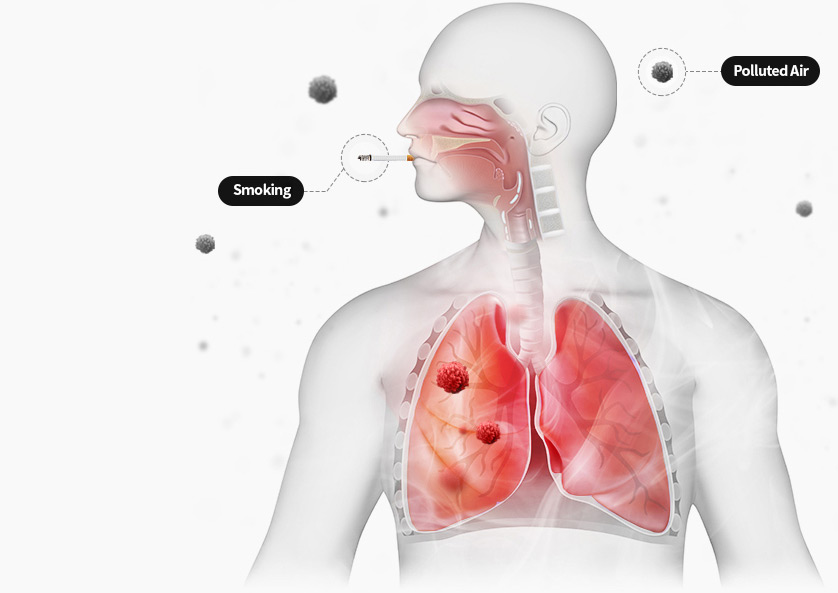
They occur when lung function deteriorates due to repeated exposure to smoking, polluted air, viral infections, and toxic substances.

Emphysema – Large Air Pockets in the Lungs

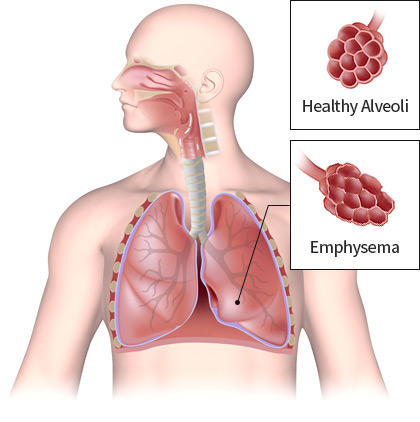
Emphysema refers to the formation of large air pockets in the lungs.
Normally, lungs expand and contract like balloons during breathing.
In emphysema patients, the walls between alveoli (tiny air sacs) are destroyed, losing elasticity and causing permanent enlargement.
This leads to impaired lung function, preventing efficient gas exchange, which results in chronic coughing, phlegm, and shortness of breath.

Smoking and Air Pollution are Major Causes

Emphysema is common among miners, construction workers, and metal workers exposed to polluted air and toxic gases.
It is also frequently diagnosed in smokers with 20–30 years of history, usually in their 50s–60s.
Respiratory infections accelerate disease progression, so patients must take extra care to avoid such infections.

Main Causes

  • Smoking
  • Air pollution
  • Repeated toxic exposure
  • Tuberculosis
  • Tuberculous pleurisy
  • Severe measles in the past

Chronic Cough and Phlegm

Key symptoms include persistent cough and phlegm.
Patients often appear thin, weak, and malnourished due to impaired lung contraction.
Muscle mass is reduced, and insufficient oxygen supply to the blood may cause cyanosis—pale or bluish lips and face.

Key Symptoms

  • Chronic cough and phlegm
  • Severe shortness of breath
  • Cyanosis

Bronchiectasis – Permanently Dilated Bronchi

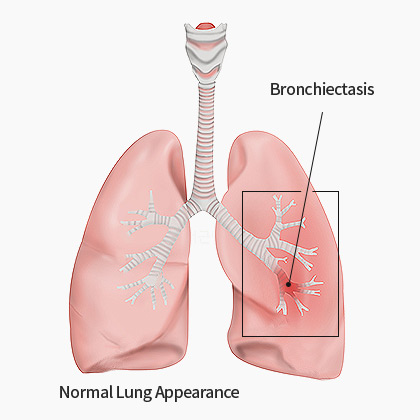
Bronchiectasis is a condition where bronchi are abnormally widened, causing persistent cough with large amounts of phlegm.
The muscle and elastic tissue of the bronchial walls are destroyed, leaving them permanently dilated.
This impairs mucus clearance, leading to retained thick phlegm, secondary infections, and complications such as emphysema and non-tuberculous mycobacterial infections.

Childhood Pneumonia is a Major Cause

Many patients develop bronchiectasis after pneumonia, bronchitis, or tuberculosis.
Children with severe bacterial pneumonia are especially vulnerable.
Adults who suffered serious pulmonary tuberculosis may also develop bronchiectasis as a complication, even after recovery.

Main Causes

  • Untreated bacterial pneumonia
  • Immune deficiency
  • Overwork and stress

Foul-Smelling or Blood-Streaked Phlegm

Symptoms include cough, foul-smelling purulent sputum, hemoptysis (bloody sputum), fatigue, weight loss, fever, and malaise.
In advanced cases, patients may develop shortness of breath, cyanosis, chronic obstructive airway disease, and complications like repeated infections, empyema, pneumothorax, or lung abscesses.

Key Symptoms

  • Foul-smelling sputum
  • Bloody sputum
  • Fatigue and weight loss
  • Shortness of breath
  • Cyanosis
  • Fever and malaise

Strengthening Lung Function to Support Tonsils and Bronchi

Prevention is the best treatment for severe lung diseases, but once developed, continuous Pyunkang-tang therapy helps
restore alveolar health and strengthen the bronchi, aiding in recovery of lung and respiratory functions.

Pyunkang Hospital’s Fundamental Treatment

Strengthening alveoli and bronchi with Pyunkang-tang

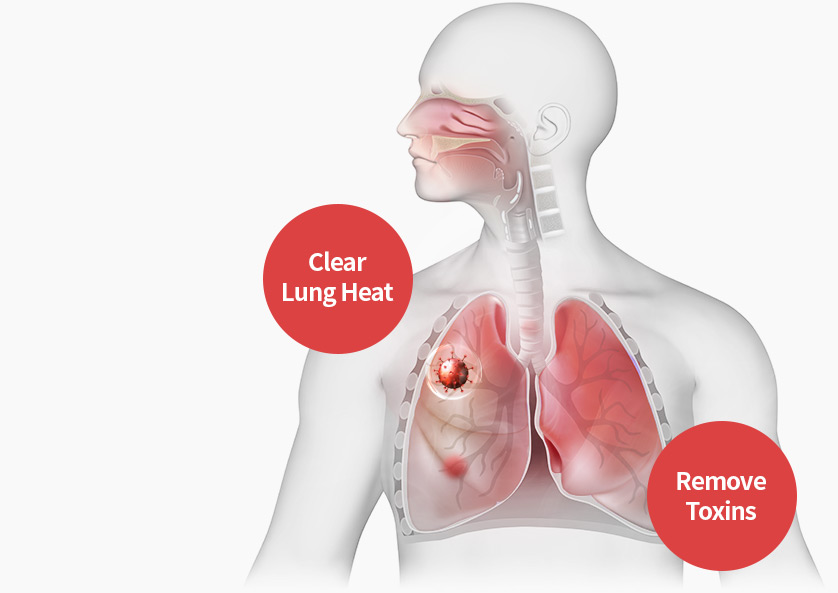
When Pyunkang-tang clears heat buildup in the lungs and revitalizes lung function, this directly strengthens the tonsils.
The activated lymphocytes released from healthy tonsils then help regenerate the damaged muscle and elastic layers
of the bronchi.

  • STEP 1

    Damaged Lung Function

  • STEP 1

    Damaged Lung Function

  • STEP 2

    Enhancing Lung Function
    & Immunity with Pyunkang-tang

  • STEP 2

    Enhancing Lung Function
    & Immunity with Pyunkang-tang

  • STEP 3

    Support lung function
    with Cheong-Pye (Lung-Cleansing)

  • STEP 3

    Support lung function
    with Cheong-Pye (Lung-Cleansing)

  • STEP 4

    Enhanced Immunity,
    Resistance, and Body Balance

  • STEP 4

    Enhanced Immunity,
    Resistance, and Body Balance

Trusted Treatment Outcomes for Severe Lung Diseases at Pyunkang Hospital

Proven Results of Pyunkang Medicine

Many patients have experienced Pyunkang Hospital’s Cheong-pye (lung-cleansing) treatment, which focuses on preventing recurrence.
By addressing the root cause, treatment can be achieved without relapse.

  • *Based on 2021 data
    Healing Without Relapse:
    Pyunkang

    Number of Intractable Lung Disease
    Patients Treated Over 50 Years

    0patients
  • *Based on 2021 data
    Worth Recommending:
    Pyunkang

    1 in 2 patients visit through personal referrals

    Patients referred
    by acquaintances

    %

Pyunkang – ‘Pyun(扁)’ from tonsils, ‘Kang(康)’ for health

Pyunkang-tang, purifies the lungs

  • Pyunkang-tang has the same ingredients as Pyunkang-hwan.

    Pyunkang-tang, a world-recognized herbal remedy

    Pyunkang-tang, formulated based on the philosophy of 'cleansing the lungs (淸肺)', has shown excellent results for patients with various respiratory diseases and has been consistently loved for over 50 years.
    Its outstanding efficacy has been published in prestigious SCI-grade academic journals and is recognized in over 30 countries worldwide.
    It plays a vital role in promoting the excellence of Oriental medicine and Pyunkang medicine globally.
    View Details
  • Pyunkang-tang has the same ingredients as Pyunkang-hwan.

    Maximizes immunity and
    self-healing ability

    Pyunkang-tang maximizes the body's immune system and self-healing capacity to fundamentally treat diseases.
    It strengthens the energy of the lungs, which absorb the energy of nature, and fortifies the tonsils—key to immunity— enabling side-effect-free treatment of various respiratory and skin conditions.
    View Details
  • Pyunkang-tang has the same ingredients as Pyunkang-hwan.

    Activates lung function

    Pyunkang-tang activates the lungs, which govern all energy in the body, strengthening the entire respiratory system to prevent colds and tonsillitis, eliminate rhinitis and asthma, and treat chronic conditions like atopic dermatitis.
    View Details
  • Pyunkang-tang has the same ingredients as Pyunkang-hwan.

    Improves allergic constitution to normal

    Pyunkang-tang improves allergic constitutions that react even to small allergens into a normal constitution, helping prevent colds and making the body resilient to allergens that cause rhinitis, asthma, and atopy—also known as the
    "allergy march.
    View Details

Pyunkang-tang extract, caused by air pollutants,

reduces excessive secretion of inflammatory respiratory sputum and

relieves bleomycin (BLM)-induced pulmonary fibrosis

/ Director Hyo-Seok Seo, Professor Choong-Jae Lee, Chungnam National University College of Medicine, Professor Hyun-Jae Lee, Sahmyook University

Bleomycin (BLM): A substance that causes lung damage or pulmonary fibrosis

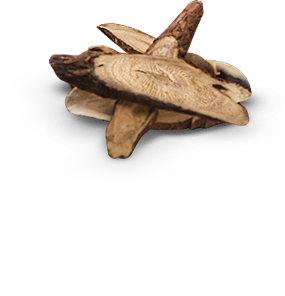
Pyunkang-tang(hwan) extract: Composed of 6 ingredients including honeysuckle flower,
liriope, codonopsis, xanthium, arborvitae, and prepared rehmannia root

SCI: Abbreviation for Science Citation Index;
SCI journal registration proves global academic recognition

Global SCI-Level International Journal JTCM

Pyunkang-tang(hwan) extract

may alleviate respiratory diseases
and pulmonary fibrosis effectively.

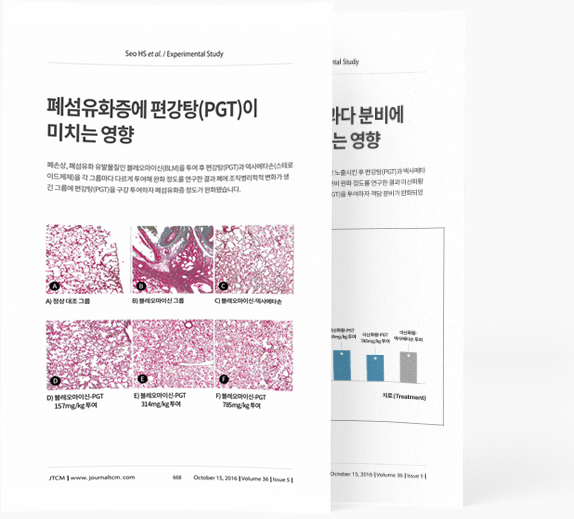
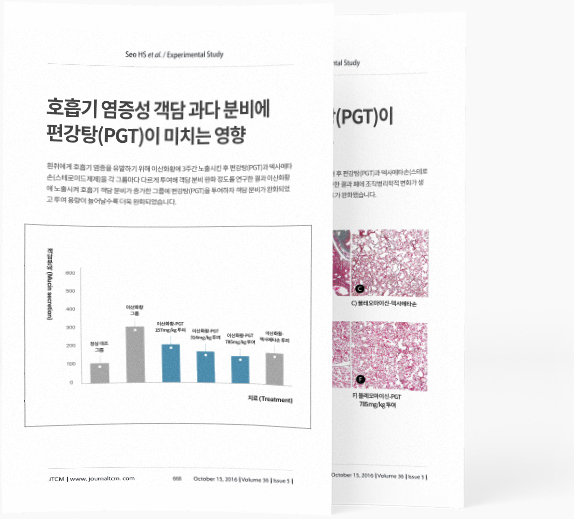
A research paper on Pyunkang-tang(hwan) was published in the October 2016
issue of the SCI-level international journal JTCM, receiving scientific recognition.

The study showed that hardened lung tissue improved after taking
Pyunkang-tang(hwan) extract, and that rats exposed to sulfur dioxide,
which caused increased sputum production, showed reduced sputum
secretion after administration of the extract.

Effects of Pyunkang-tang (PGT)
on Pulmonary Fibrosis

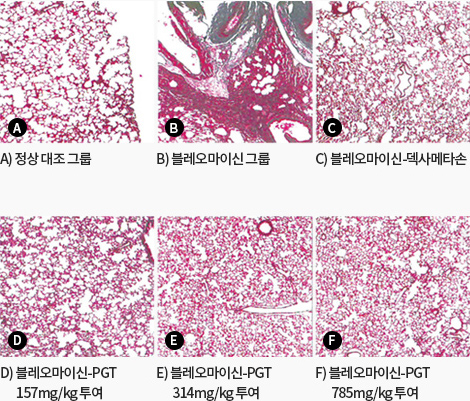
After administering bleomycin (BLM), a substance that causes lung injury and pulmonary fibrosis, each group was treated differently with Pyunkang-tang (PGT) and dexamethasone (a steroid drug).
The study showed that in the group with histopathological changes in the lungs, oral administration of Pyunkang-tang (PGT) alleviated the severity of pulmonary fibrosis.

Effects of Pyunkang-tang (PGT) on
Excessive Inflammatory Respiratory Sputum Secretion

After administering bleomycin (BLM), a substance that causes lung injury and pulmonary fibrosis, each group was treated differently with Pyunkang-tang (PGT) and dexamethasone (a steroid drug).
The study showed that in the group with histopathological changes in the lungs, oral administration of Pyunkang-tang (PGT) alleviated the severity of pulmonary fibrosis.

Better with Herbal Medicine

Lifestyle habits to maximize treatment effects

Ventilation

It’s good to ventilate every 3 hours, and in the morning and evening
ventilate regularly for at least 30 minutes. Although invisible to the eye,
fine particles in the air settle in the bronchi and lungs, causing rhinitis
or asthma.
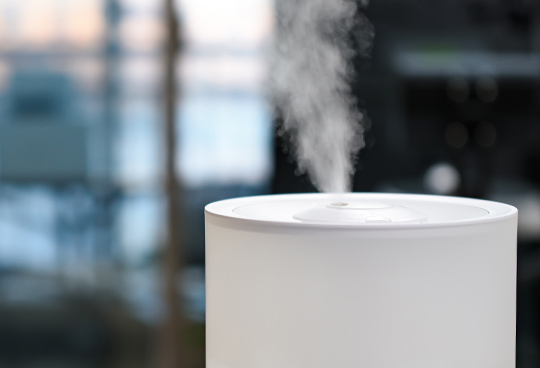
Humidity Control

Excess humidity indoors can cause damp floors and walls and mold
growth. It can also increase mites and harmful substances in the air.
On the other hand, dryness can lead to respiratory diseases or worsen
asthma. The optimal humidity is around 50–60%.

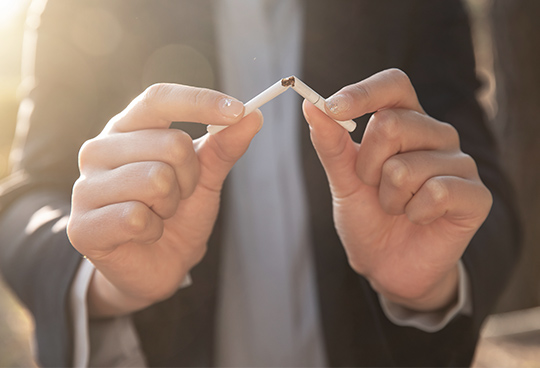
No Smoking

Worrying about lung health while smoking is like jumping into the sea
in winter and fearing your clothes will get wet.
Smoking is harmful not only to the smoker but also to people exposed
to secondhand smoke.

Breathing Technique

Shallow breathing leaves waste-filled carbon dioxide in the body.
Deep breathing increases lung capacity, allowing more fresh air in and
expelling more stale carbon dioxide.

Clean Environment

Dust and mites trigger respiratory illnesses. Preventing environments
that cause respiratory problems helps maintain a healthier lifestyle.

Positive and Grateful Mindset

The best way to reduce heat in the lungs and strengthen lung function
is gratitude. A grateful heart brings joy and releases beta-endorphins.
It creates hope and happiness, and when this becomes a habit, stress
and illness have no place to take root.